
7 Mistakes You’re Making with Your Home Electrical Panel (And How to Fix Them Before 2027)
Hey there! If you’re like most Maine homeowners, your electrical panel is probably tucked away in a dark corner of the basement or a dusty closet. It’s one of those "out of sight, out of mind" things: until the power goes out or a breaker won't stop Tripping.
As the heart of your home’s electrical system, that grey metal box has a big job. It takes the power coming from the street and distributes it safely to your lights, your fridge, and increasingly, your heat pumps and EV chargers. But here’s the thing: as we move toward 2027, the standards for home safety and energy efficiency are changing. What was "fine" ten years ago might be a major safety risk or a bottleneck for your home’s modern upgrades today.
At Downeast Electrical Services, our team of experienced electricians in Maine sees the same handful of mistakes over and over. Some are simple DIY slip-ups, while others are leftovers from previous owners who tried to take shortcuts.
Let’s walk through the seven most common mistakes you might be making with your electrical panel and, more importantly, how we can help you fix them so your home is ready for the future.
1. The "Double Tap" (Two Wires, One Breaker)
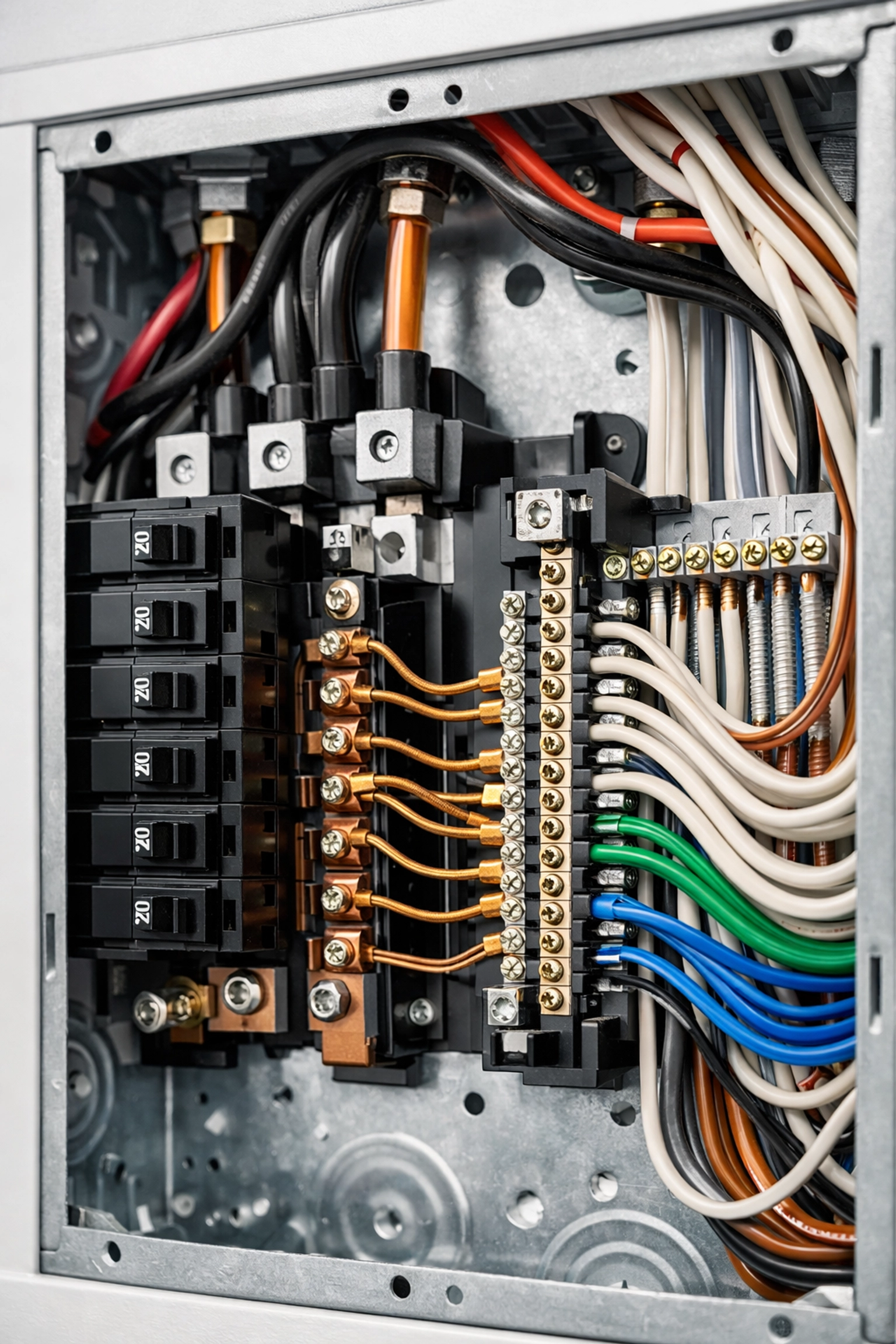
This is perhaps the most common mistake we find when we open up a panel. "Double tapping" is when someone tries to save space by shoving two circuit wires into a single breaker terminal designed for only one.
The short answer to why this is bad? It’s a fire hazard. Most breakers are engineered to hold one wire securely. When you add a second, the screw doesn't apply even pressure to both. Over time, one wire can wiggle loose. This creates "arcing", basically tiny lightning bolts jumping across the gap: which generates massive amounts of heat and can easily start a fire inside your panel.
The Fix: We can install a "tandem" or dual-rated breaker that is specifically designed by the manufacturer to handle two circuits in one slot. If your panel is already full, it might be time to discuss a sub-panel or a full service upgrade.
2. Using the Wrong Breaker Brand or Size
It’s a common myth that if a breaker "clicks" into place, it’s safe to use. Unfortunately, that’s not how it works. Just because a brand-X breaker fits into a brand-Y panel doesn’t mean the contact points are making a solid connection.
When the connection isn't perfect, it creates resistance. Resistance leads to heat, and heat leads to a melted bus bar (the part of the panel the breakers snap onto). Once a bus bar is damaged, the whole panel usually needs to be replaced.
The Fix: Always use breakers that are UL-listed for your specific panel brand (like Square D, Eaton, or Siemens). Our Maine electricians always carry the right parts to ensure a factory-perfect fit every time.
3. Undersized Wires for High-Draw Appliances
With the huge push for electrification in the Pine Tree State, many people are adding high-draw appliances like mini-split heat pumps or EV chargers.
A major mistake is trying to run these powerful machines on the same thin wires used for a bedroom outlet. If the wire is too small for the amount of electricity (amperage) flowing through it, the wire becomes a heating element. It will melt its own insulation long before the breaker ever thinks to trip.
The Fix: Before adding a new appliance, have a professional calculate the load and ensure the wire gauge matches the breaker. For example, a 50-amp EV charger needs much thicker wire than a 15-amp lighting circuit.
4. The "Mystery Box" (Missing or Faded Labels)
We’ve all been there: the power goes out in the kitchen, you run to the basement, and you find a panel labeled in faded pencil from 1984: or not labeled at all.
While it seems like just a nuisance, failing to label your circuits is actually a safety issue. In an emergency, such as a localized electrical fire or a burst pipe near an outlet, you need to be able to shut off the correct power source instantly. Guessing and checking isn't an option when seconds count.
The Fix: Spend an afternoon with a partner and some walkie-talkies (or cell phones) to map out every outlet and light in your house. Use a permanent marker or a printed label maker to clearly mark the directory. If that sounds like a headache, we’re happy to help trace your circuits during a routine safety inspection.
5. Overloading the Total Capacity of the Panel
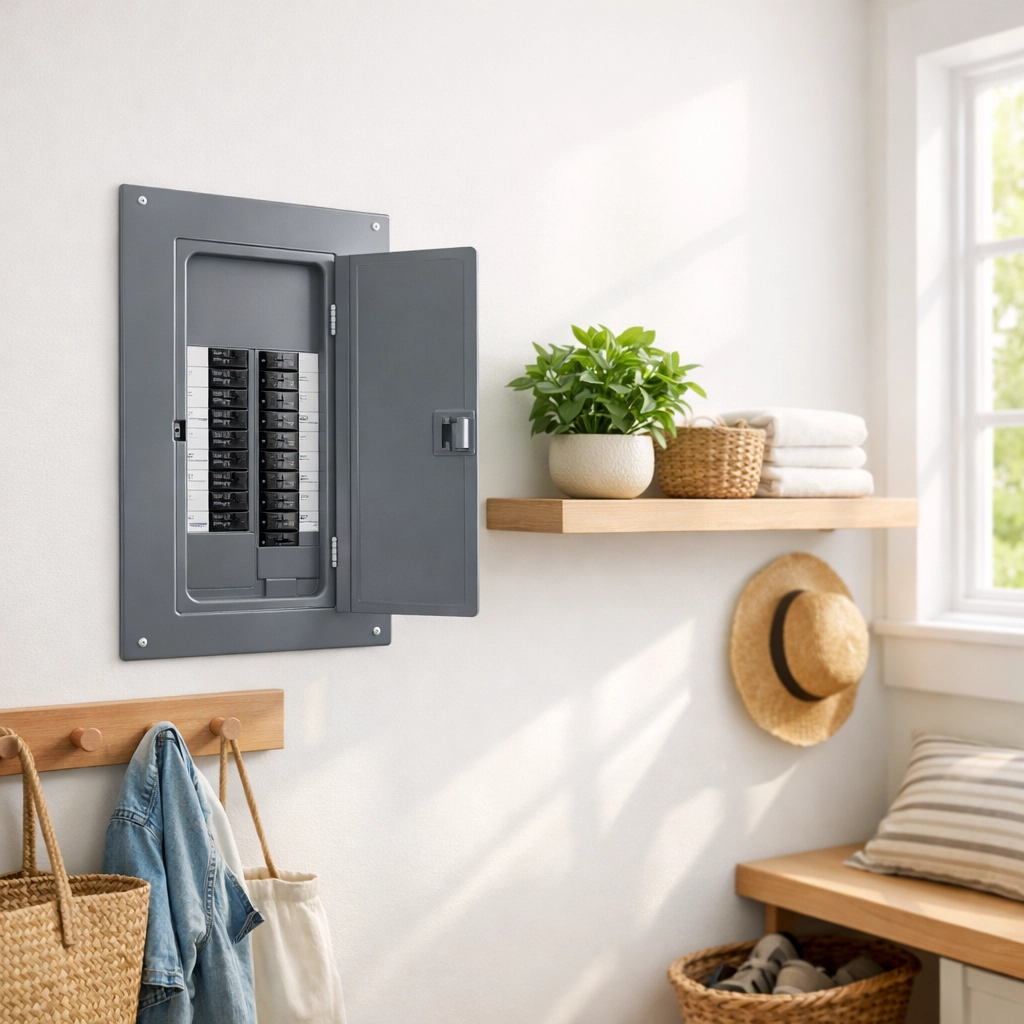
Many older homes in Maine still have 100-amp or even 60-amp service panels. In the 1970s, that was plenty. But today, between our big-screen TVs, computers, electric ovens, and new green-energy tech, we are pushing those old panels to the limit.
If you find that your lights flicker when the AC kicks on, or if your main breaker feels hot to the touch, you are likely overloading your panel. Consistently running a 100-amp panel at 95 amps causes the internal components to degrade rapidly.
The Fix: You don't always need a massive $5,000 upgrade. Sometimes "Smart Load Management" can prioritize which appliances get power so you don't blow the main fuse. However, for most modern homes, upgrading to a 200-amp service is the gold standard for safety and future-proofing. You can learn more about smart home upgrades and savings here.
6. Forgotten Knockout Protection
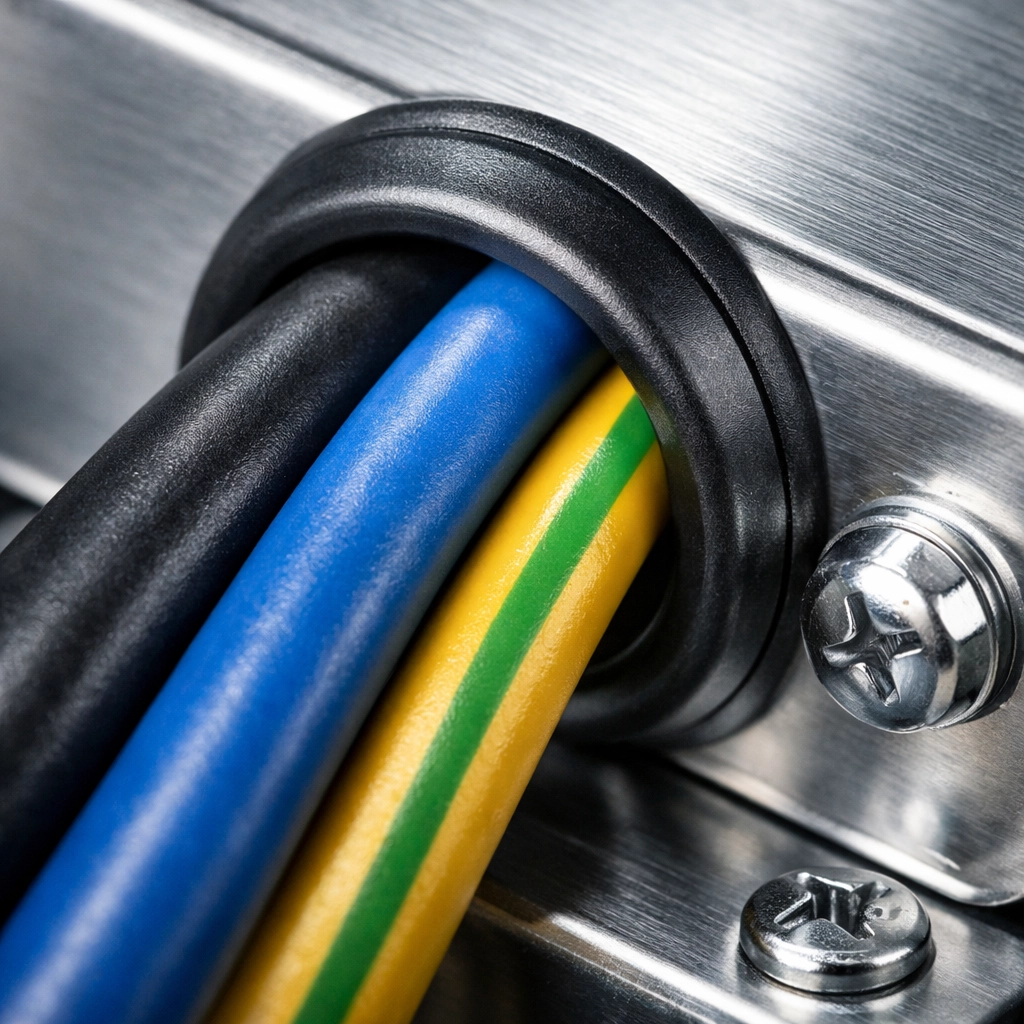
When an electrical panel is installed, there are "knockouts" (round metal plugs) that are removed to let wires inside. A very common DIY mistake is leaving these wires to rest directly against the sharp metal edges of the hole.
Over years of subtle vibrations in the house, that sharp metal edge can saw through the wire’s plastic coating. Once it hits the copper, you get a direct short to the panel casing, which can be catastrophic.
The Fix: Every wire entering the panel should pass through a plastic bushing or a proper cable connector. These inexpensive little parts act as a "buffer" between the wire and the metal. It’s a simple fix that prevents a major disaster.
7. Improper Grounding and Bonding
This is the most "invisible" mistake on the list, but it’s arguably the most dangerous. Grounding gives excess electricity a safe path to the earth if there’s a surge or a fault. If your panel isn't properly grounded (often seen in older Maine homes with aging plumbing), a surge could send high voltage through your appliances: or even through you.
As we approach 2027, electrical codes are becoming even stricter about how homes are grounded to handle the "dirtier" power and higher frequencies of modern electronics.
The Fix: This is definitely not a DIY job. A licensed electrician in Maine needs to verify that your grounding electrode (the rod in the dirt) and your bonding (the connection to your water pipes) are up to modern safety standards.
Why You Should Address These Before 2027
You might be wondering, "Why the rush for 2027?" Maine is currently in the middle of a massive energy transition. Between state-wide incentives for heat pump installations and the new energy code changes, our grid is evolving.
By taking care of these panel issues now, you aren’t just making your home safer: you’re making it "ready" for the next generation of appliances and potentially increasing your home's resale value.
At Downeast Electrical Services, we pride ourselves on making these upgrades seamless and hassle-free. We believe in simple, honest advice. We won't try to sell you a whole new panel if a $50 breaker swap will fix the problem. Our goal is to keep our Maine neighbors safe and powered up for years to come.

We Are Here to Help!
If any of the "mistakes" above sounded a little too familiar, don't worry! Most of these issues are common and easily fixed by a professional. Whether you’re in Rockland or Biddeford, our team is ready to help you audit your home’s electrical health.
Stay safe, Maine! If you have questions or want us to take a look at that "mystery box" in your basement, feel free to book a service with us. We’re here to shed light on your electrical needs and ensure your home stays a happy, safe place to live.
Stay tuned for more informative blog posts from us as we navigate the changing world of Maine’s energy together!
An electrical panel upgrade is becoming essential as homes in Maine add more high-demand systems like EV chargers and heat pumps.
Older panels often face issues like overloads, unsafe wiring, and improper grounding that can increase safety risks.
Upgrading ensures your system is future-ready, efficient, and compliant with modern electrical standards.
It’s a practical step to improve both home safety and long-term energy reliability.