
Heat Pump Water Heater Rebates in Maine: What the Electrical Installation Really Costs in 2026
Synopsis
Thinking about replacing an older electric, oil, or propane water heater in Saco, Biddeford, Portland, Scarborough, Sanford, Old Orchard Beach, South Portland, Cape Elizabeth, Kennebunk, Windham, Gorham, Westbrook, Falmouth, Yarmouth, or Freeport?
The short answer is yes. A heat pump water heater can be a practical choice for many Maine homes. However, the equipment price is only part of the project. Electrical installation may require a dedicated 240-volt circuit, a new breaker, wiring, panel capacity calculations, permits, and possibly a service or subpanel upgrade.
For 2026, Efficiency Maine offers either a limited-time $1,200 instant discount through October 30, 2026, or a $1,150 mail-in rebate for qualifying units. In Southern Maine, a typical complete installation may cost approximately $2,600 to $5,500 before incentives, with electrical work commonly accounting for $400 to $1,000 when a new circuit is needed.
How much does a heat pump water heater cost in Maine?
A reasonable 2026 Southern Maine budget is:
Project scope | Estimated price |
Heat pump water heater equipment before incentives | $1,400–$2,300 |
New dedicated 240V circuit | $400–$1,000 |
Plumbing, installation, disposal, and condensate work | $900–$1,800 |
Panel or subpanel work, if required | Add $800–$3,000 |
Typical complete project before rebates | $2,600–$5,500 |
These are estimates, not fixed quotes. Longer wire runs, finished walls, difficult basement access, condensate pumps, unusual plumbing, and older electrical equipment can increase the cost.
If you are replacing an existing electric water heater in the same location, the existing circuit may be usable. That can reduce the electrical portion substantially. Converting from oil, propane, or gas usually requires new electrical wiring.
What is the Efficiency Maine rebate in 2026?
According to Efficiency Maine’s Heat Pump Water Heater Program, qualifying homeowners may use one of these incentives:
$1,200 instant discount at participating retailers and distributors through October 30, 2026.
$1,150 mail-in rebate when the unit is purchased without the instant discount.
The unit must be new, installed in Maine, and ENERGY STAR certified.
The unit does not have to be installed by an Efficiency Maine Residential Registered Vendor.
Only one rebate or instant discount is allowed per installation address per calendar year.
The instant discount and mail-in rebate cannot be combined.
For a mail-in rebate, keep the retailer or wholesaler receipt showing the purchase date, price, and model number. The claim must be emailed or postmarked within six months of purchase. Efficiency Maine provides the official rebate form.
The incentive cannot exceed the purchase price of the water heater. Program terms may change, so confirm the current requirements before purchasing.
Is there a federal 25C tax credit for a 2026 installation?
The current IRS Energy Efficient Home Improvement Credit page states that qualifying improvements could receive a 30% credit, with heat pumps and heat pump water heaters subject to a potential $2,000 annual limit, but the IRS page currently says the credit applies to property placed in service through December 31, 2025.
That means homeowners should not assume a heat pump water heater installed in 2026 qualifies for the federal 25C credit. The tax rules have changed, and the final answer depends on the law and IRS guidance in effect for the installation date. Ask a qualified tax professional before including a 2026 project on your return.
Efficiency Maine’s rebate is separate from federal tax treatment.
Does a heat pump water heater need a dedicated circuit?
Usually, yes.
Most full-size residential heat pump water heaters use a dedicated 208/240-volt circuit. Sharing that circuit with a dryer, freezer, sump pump, mini-split, or other appliance is generally not appropriate.
A typical installation includes:
A dedicated two-pole breaker.
Properly sized copper conductors.
Grounding and bonding.
A disconnect or approved means of disconnect where required.
Wiring connected according to the unit’s nameplate and installation manual.
Our team verifies the model requirements before selecting the breaker and conductor size.
What size breaker does a heat pump water heater need?
The most common configuration is a 240-volt, 30-amp, two-pole breaker. Many standard hybrid units use 10 AWG copper conductors on that circuit.
However, the correct answer is always model-specific. Some units use 15 amps, some require different wiring, and some models may have different minimum circuit ampacity requirements.
The ENERGY STAR heat pump water heater guidance notes that 240-volt units commonly require 30-amp panel service, while 15-amp models are also available. Check the rating plate and manufacturer manual before purchasing a breaker.
Can a heat pump water heater run on 120 volts?
Yes, some models are designed for 120-volt plug-in operation. These models can be useful when a home has limited electrical capacity or when running a new 240-volt circuit would be difficult.
The tradeoffs may include:
Lower first-hour recovery.
Smaller electric resistance backup elements.
Different installation requirements.
A required GFCI-protected receptacle in locations covered by electrical code.
Do not assume a 120-volt unit will perform exactly like a 240-volt model. Compare the first-hour rating, tank size, recovery performance, and manufacturer requirements.
Does a heat pump water heater need a GFCI breaker under the 2026 code?
It depends on the installation location, equipment design, and the requirements enforced by the local Authority Having Jurisdiction.
A hardwired 240-volt unit in a dry, dedicated utility area may not be treated the same as a 120-volt receptacle in a garage or near a sink. GFCI protection may be required or recommended in garages, damp areas, unfinished basements, and locations near water.
The manufacturer’s instructions also matter. Under NEC listing and installation requirements, listed equipment must be installed according to its instructions. Maine projects must follow the applicable NEC edition, Maine amendments, and local inspection requirements. Our Maine electrical code guidance explains why the final answer should be confirmed for the specific property.
What clearance and room volume does it need?
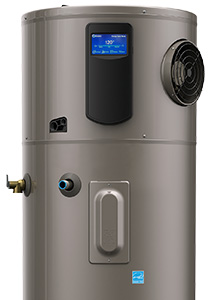
A heat pump water heater needs room air to extract heat. ENERGY STAR says manufacturers commonly require approximately 450 to 700 cubic feet of free air space, while its consumer guidance recommends planning for about 1,000 cubic feet when possible.
A 10-by-10-foot room with an 8-foot ceiling provides about 800 cubic feet. Your exact model may require more or less.
Plan for:
At least 6 inches above and around the unit when allowed by the manual.
More room for filter access and service.
Larger clearances where the manufacturer specifies them.
Louvered doors, transfer grilles, or approved ducting in smaller rooms.
A location that generally stays between 40°F and 90°F.
ENERGY STAR recommends interior spaces such as basements, utility rooms, and furnace rooms. In a Maine basement, the heater can work in winter, but colder air reduces efficiency and may cause the electric backup elements to operate more often. Avoid exposing the unit or condensate line to freezing conditions.
Does it need a condensate drain?
Yes. Heat pump water heaters create condensate as they operate.
The water is generally benign, but it must be routed safely to an approved drain, such as:
A floor drain.
A laundry or utility sink.
A standpipe.
A condensate pump.
Another approved receptor allowed by local plumbing requirements.
The drain should slope properly, avoid freezing, and remain below the unit’s condensate outlet where required. ENERGY STAR’s installation guidance specifically warns against draining condensate directly into drain-waste-vent piping or the water heater’s emergency pan.

Can a 100-amp panel handle a heat pump water heater plus a mini-split?
Possibly, but the answer requires a load calculation. The panel’s main rating alone does not tell us whether it has capacity.
We review the existing service and account for:
Heat pump water heater load.
Mini-split or multi-zone heat pump load.
Electric range, dryer, and laundry equipment.
Baseboard heat or electric boiler.
Well pump, sump pump, and other motor loads.
Existing panel condition and available breaker spaces.
A 100-amp service may support the added equipment in some homes. In others, a subpanel, load-management approach, or service upgrade may be necessary. Our service and panel upgrade work includes capacity evaluation and options.
How much does an electrician charge to install the circuit?
For a straightforward Southern Maine installation with an accessible panel and an open route, budget approximately:
$400–$1,000 for a new dedicated 240-volt circuit.
$800–$3,000 additional for panel, subpanel, or service work when required.
Less for a direct replacement that can reuse a compliant existing circuit.
The price depends on wire distance, basement access, finished walls, breaker type, conduit requirements, and whether repairs are needed.
What permits are required in Maine?
Electrical permits and inspections are commonly required for new branch circuits, panel work, and service upgrades. Plumbing or building permits may also apply to the water heater replacement, depending on the town and scope.
Permit procedures vary among municipalities. Downeast Electrical Services can assist with permit submission and documentation, coordinate the electrical inspection, and identify questions that should be answered by the local inspector.
Can I install a heat pump water heater myself?
Efficiency Maine allows do-it-yourself installation for its residential rebate when the other program requirements are met. However, that does not eliminate electrical, plumbing, building, or permit requirements.
A homeowner should not install or modify a 240-volt circuit without the appropriate qualifications. Our electrical scope can include:
Dedicated circuit installation.
Breaker and disconnect installation.
Panel load calculation.
Service or subpanel upgrades.
Electrical permit and inspection coordination.
Troubleshooting and service calls.
Heat pump water heater vs. propane vs. oil in Maine
Water-heating option | Typical installed cost before incentives | Typical operating-cost outlook |
Heat pump water heater | $2,600–$5,500 | Often lowest of these options when installed in a suitable space |
Propane water heater | $3,200–$6,000 | Depends heavily on propane prices and household usage |
Oil water heater | $4,000–$7,000 | Often higher maintenance and fuel costs |
Standard electric tank | $1,500–$3,000 | Lower upfront cost, generally higher electric use |
These are Southern Maine planning estimates, not guarantees. Efficiency Maine’s published example compares approximately $241 per year for a heat pump water heater with $891 per year for a traditional electric water heater, but your household’s usage, water temperature, tank size, and electricity rate will change the result.
For CMP customers, the combined supply and delivery rate has been approximately 24.68 cents per kWh after July 1, 2026, excluding fixed charges and subject to rate changes. See CMP pricing information and Maine Public Utilities Commission electricity rates.
How Downeast Electrical Services can help
A heat pump water heater can be a smart upgrade, but the electrical installation should be planned before the unit is purchased. We can inspect the panel, calculate available capacity, identify the correct circuit, coordinate permits, and complete the wiring for homes and businesses throughout Southern Maine.
The key points are simple:
Most full-size units use a dedicated 240-volt circuit.
A 30-amp breaker is common, but the model determines the final requirement.
Condensate drainage and room airflow must be planned.
A 100-amp panel may or may not support the added load.
Efficiency Maine incentives can substantially reduce equipment cost.
The federal 25C credit should not be assumed for a 2026 installation without current tax advice.
Contact Downeast Electrical Services for guidance on your panel, circuit, permit, and installation needs. We serve Saco, Biddeford, Portland, Scarborough, Sanford, Old Orchard Beach, South Portland, Cape Elizabeth, Kennebunk, Windham, Gorham, Westbrook, Falmouth, Yarmouth, and Freeport.
Frequently Asked Questions
How much does Downeast Electrical Services charge to install a heat pump water heater circuit?
A typical new 240-volt dedicated circuit is estimated at $400–$1,000 in Southern Maine. The final price depends on the wire route, panel location, access, breaker requirements, and inspection needs.
Can you tell me whether my 100-amp panel is large enough?
Yes. We perform a load and capacity review. We will look at the water heater, mini-split, electric appliances, heating equipment, and existing service before recommending a circuit, subpanel, or service upgrade.
Do you install the water heater itself?
Our primary role is the electrical work. We can coordinate with the plumber or installer and complete the dedicated circuit, breaker, disconnect, panel work, permitting, and inspection support.
How long does the electrical installation take?
A straightforward circuit installation often takes approximately one day, assuming the panel and wiring route are accessible. Panel upgrades, service changes, difficult routing, and permit scheduling can extend the project.
Can you help with the Efficiency Maine rebate?
We can provide project and electrical documentation when applicable, but the homeowner should confirm eligibility, submit the official claim, and retain the equipment receipt. Review the current Efficiency Maine requirements before purchasing.
Can I add a heat pump water heater and a mini-split at the same time?
Often, yes, but the panel and service must be evaluated first. We can plan both loads together and recommend the safest code-compliant approach.
Is a basement a good location in Maine?
Usually. Basements often provide adequate air volume and keep noise away from living areas. The space should remain warm enough for the selected model, and condensate piping must be protected from freezing.
How do I request an estimate?
Contact Downeast Electrical Services through our online contact page or call 207-352-3722. Photos of the electrical panel, the water heater location, and the proposed model can help us provide more useful guidance.
Comments