
Single-Zone Vs Multi-Zone Mini-Splits: Which Is Better for Your Maine Rebate Eligibility?
If you're a homeowner in Southern Maine thinking about installing a mini-split heat pump, you've probably heard about the generous rebates available through Efficiency Maine. But here's where things get a little tricky: should you go with a single-zone system or a multi-zone setup? And more importantly, which one will get you the most money back?
We get this question all the time from folks in Biddeford, Portland, Saco, and throughout York and Cumberland counties. The short answer? It depends on your home, your heating needs, and how you want to maximize those rebate dollars. Let's break it all down so you can make the best decision for your situation.
What's the Difference Between Single-Zone and Multi-Zone Mini-Splits?
Before we dive into rebates, let's make sure we're on the same page about what these systems actually are.
Single-Zone Mini-Splits
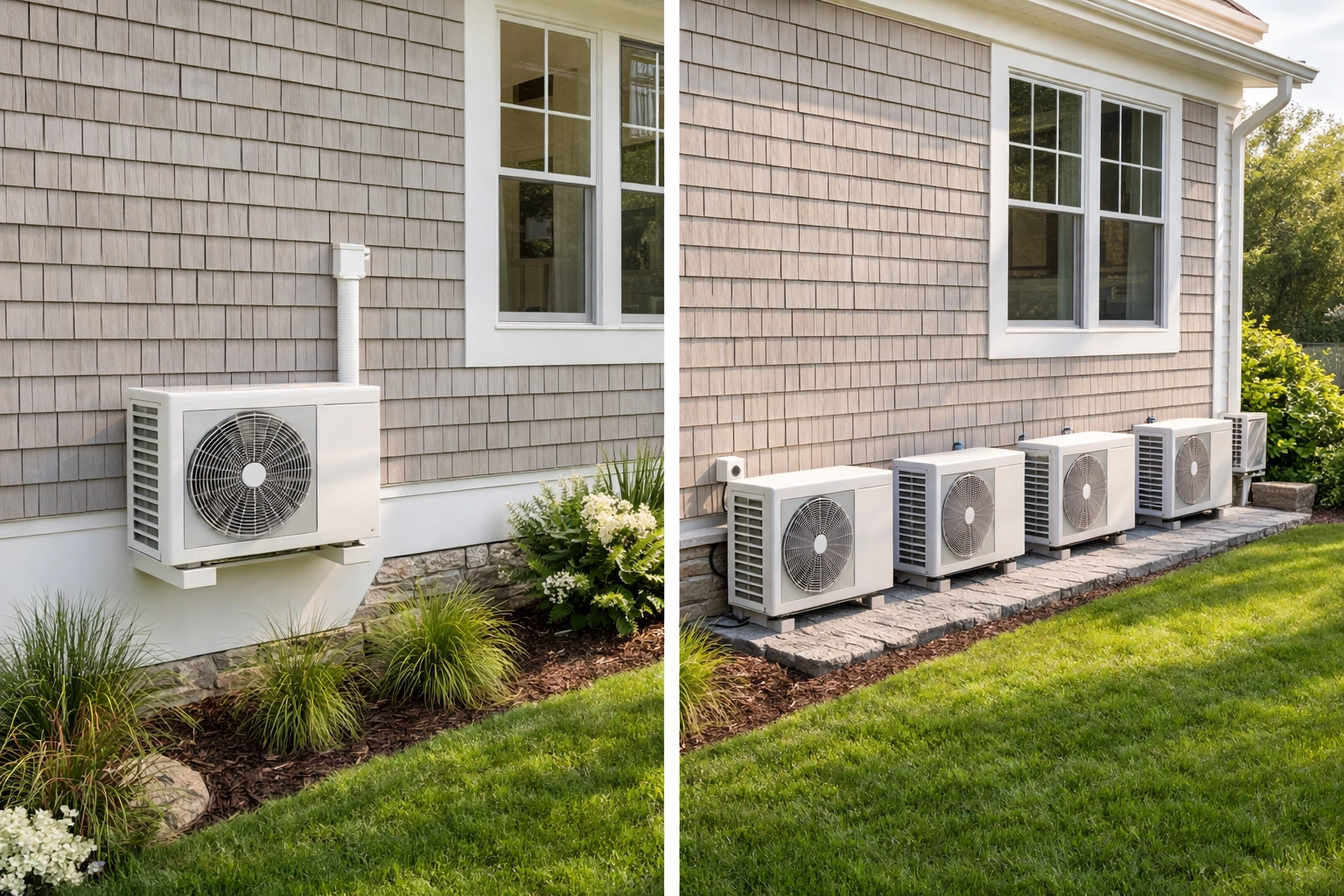
A single-zone mini-split consists of one outdoor unit connected to one indoor unit. It heats and cools a single room or area of your home. Think of it as a dedicated climate control system for your living room, bedroom, or home office.
Many homeowners in Scarborough, Old Orchard Beach, and surrounding areas start with a single-zone system to heat their most-used space. It's a great entry point into heat pump technology without a huge upfront investment.
Multi-Zone Mini-Splits
A multi-zone system uses one outdoor unit connected to multiple indoor units: typically two to five. This lets you control the temperature in several rooms independently, all from a single outdoor compressor.
Multi-zone setups are popular for larger homes or when you want whole-home comfort without installing multiple outdoor units.
How Efficiency Maine Rebates Actually Work
Here's where it gets interesting. Understanding the rebate structure is key to making the right choice for your wallet.
Efficiency Maine offers rebates based on the number of rebate-eligible outdoor units you install. Here's the current breakdown:
$3,000 per outdoor unit for low-income households
$2,000 per outdoor unit for moderate-income households
$1,000 per outdoor unit for any income level
There are also lifetime limits per housing unit:
$9,000 for low-income households
$6,000 for moderate-income households
$3,000 for standard rebates
Some registered installers also offer additional rebates for indoor units: typically $500 for the first indoor unit and $250 for each additional unit. However, these can vary by installer and program availability.
What This Means for Your Decision
Since rebates are tied to outdoor units, here's the key takeaway:
Multiple single-zone systems = multiple outdoor units = potentially more rebate dollars
One multi-zone system = one outdoor unit = one rebate amount
So if you're looking purely at maximizing rebates, installing two or three separate single-zone systems could qualify you for more money back than a single multi-zone setup.
Single-Zone Systems: Pros and Cons for Maine Homeowners
Let's look at why many electricians near Biddeford and Portland recommend single-zone systems for certain situations.
Advantages of Single-Zone Mini-Splits
Higher rebate potential: Each outdoor unit qualifies for its own rebate
Simpler installation: Less complex wiring and refrigerant lines
Independent operation: If one unit fails, the others keep working
Lower upfront cost per unit: Easier to budget and install in phases
Flexibility: Add units over time as your budget allows
Disadvantages of Single-Zone Mini-Splits
Multiple outdoor units: Takes up more exterior space
Higher total installation cost: If you need three or more zones, costs add up
More maintenance: Each system needs its own service attention
For many homeowners in Kennebunk, Wells, and Sanford, starting with one or two single-zone units makes the most sense. You can always add more later while taking advantage of rebates each time.

Multi-Zone Systems: Pros and Cons
Multi-zone systems have their own set of benefits, especially for certain home layouts.
Advantages of Multi-Zone Mini-Splits
One outdoor unit: Cleaner look, less exterior space needed
Whole-home comfort: Heat and cool multiple rooms from one system
Potentially lower total cost: For homes needing 3+ zones, one multi-zone system may cost less than multiple single-zone units
Centralized control: Many systems offer smart controls for all zones
Disadvantages of Multi-Zone Mini-Splits
Single point of failure: If the outdoor unit breaks, all zones go down
Lower rebate amount: Only one outdoor unit means one rebate
More complex installation: Requires more planning and labor
Higher upfront investment: Bigger initial cost than a single-zone system
Which Option Maximizes Your Maine Rebate Eligibility?
Let's run through a quick example to make this crystal clear.
Scenario: You want to heat three rooms in your Biddeford home and qualify for moderate-income rebates ($2,000 per outdoor unit).
Option A: Three Single-Zone Systems
3 outdoor units × $2,000 = $6,000 in rebates
(This hits your lifetime limit)
Option B: One Multi-Zone System (3 indoor units)
1 outdoor unit × $2,000 = $2,000 in rebates
Plus potential indoor unit bonuses from your installer
In this scenario, Option A could net you significantly more rebate money: but that doesn't automatically make it the best choice. You also need to consider:
Total installation costs
Available outdoor space
Long-term energy efficiency
Your home's electrical panel capacity
Speaking of electrical panels, many older homes in Southern Maine need a service upgrade before adding multiple mini-split systems. Our team can assess your panel and help you understand the full scope of your project.

What Southern Maine Electricians Recommend
As electrical contractors serving homeowners from Portland to Kennebunkport and everywhere in between, here's our honest advice:
Choose Single-Zone If:
You want to maximize rebate dollars
You're starting small and plan to add systems over time
You have adequate exterior space for multiple units
You want redundancy (backup if one unit fails)
Choose Multi-Zone If:
Exterior space is limited
You need whole-home coverage right away
Your budget works better with one larger investment
Aesthetics are a priority
Consider a Hybrid Approach
Many of our customers in Westbrook, Gorham, and South Portland go with a hybrid approach: installing two single-zone systems now and planning for more later. This strategy lets you:
Spread costs over time
Claim rebates with each installation
Stay under the lifetime rebate limits strategically
Don't Forget About Panel Capacity
Here's something many homeowners overlook: your electrical panel needs enough capacity to handle your new mini-split systems. Whether you choose single-zone or multi-zone, each system draws power.
If you're unsure whether your panel can handle the load, check out our guide on panel upgrades. Adding a mini-split to an already-maxed panel can create safety issues and code violations.
How to Get Started
Ready to figure out which mini-split setup is right for your home and your rebate eligibility? Here's what we recommend:
Assess your heating needs: Which rooms need climate control?
Check your income eligibility: Higher rebates are available for qualifying households
Evaluate your electrical panel: Make sure you have capacity
Get a professional assessment: A registered installer can help you maximize rebates
Apply through Efficiency Maine: Work with a registered vendor for a smooth process
Our team at Downeast Electrical Services works with homeowners throughout Southern Maine: from Biddeford and Saco to Brunswick and beyond. We're happy to walk you through your options and help you understand exactly how much you could save.
The Bottom Line
When it comes to Maine rebate eligibility, single-zone systems generally offer more rebate potential because each outdoor unit qualifies for its own incentive. However, the "best" choice depends on your specific situation, home layout, and long-term goals.
The most important thing? Work with a knowledgeable local electrician who understands both the technical requirements and the rebate programs. That way, you'll make a decision that keeps your home comfortable and your wallet happy.
Have questions about mini-split installation or rebate eligibility in the Biddeford area? Contact us for expert guidance. We're here to help you navigate the process from start to finish.
Comments