
Portable Generator Safety in Maine: Why the Inlet Box + Interlock Combo Beats the Extension Cord
When a fall storm knocks out power, a portable generator can keep important parts of your Maine home running. It can help protect your food, maintain heat-related equipment, and keep essential lights and devices available during an outage.
But the connection method matters.
The safest way to connect a portable generator to selected household circuits is an outdoor generator inlet box paired with a listed panel interlock kit or transfer switch. This setup is safer, cleaner, and more convenient than running multiple extension cords through windows or doors.
If you are comparing electrical companies in Maine or looking for a qualified Southern Maine electrician before winter arrives, understanding the difference can help you make a confident decision.
First: Never Plug a Generator Into a Wall Outlet
It may seem convenient to connect a generator to a household receptacle with a cord. This is sometimes called “backfeeding.”
It is also extremely dangerous.
When a generator feeds a home through a wall outlet, electricity can travel backward through the home’s wiring and out onto utility lines. Even if the power appears to be off at your house, those lines may still become energized.
That creates a serious electrocution hazard for:
Utility lineworkers repairing storm damage
Neighbors connected to the same transformer
Anyone who assumes the power lines are de-energized
People in or near your home who may encounter improperly energized equipment
Backfeeding can also bypass some of the home’s intended circuit protection. That increases the risk of overheating, electrical shock, equipment damage, or fire.
The guidance from the Maine Emergency Management Agency (MEMA) is clear: never try to power house wiring by plugging a generator into a wall outlet.
There is no safe shortcut around proper transfer equipment.
Never Run a Generator Indoors or in a Garage
Portable generators produce carbon monoxide, or CO. This colorless, odorless gas can become deadly in a short amount of time.
Never operate a generator:
Inside your home
In a garage, even with the garage door open
In a basement or crawlspace
Inside a shed or barn
On an enclosed porch
Under a structure that traps exhaust
Near an open window, door, or ventilation intake
MEMA recommends placing a portable generator outdoors and at least 15 feet away from doors, windows, and vents. For additional safety during Maine’s storm season, homeowners should aim for 20 feet whenever the site allows. Always follow the generator manufacturer’s instructions and point the exhaust away from the home.
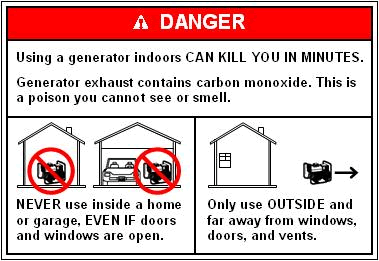
A generator should sit on a dry, stable surface where water cannot puddle or drain underneath it. If you must use it during wet weather, protect it from moisture with an open, canopy-like cover that does not trap exhaust.
Also make sure your home has working carbon monoxide alarms. Test them regularly and replace batteries as recommended.
If anyone using the generator feels dizzy, weak, sick, or confused, get outside to fresh air immediately and call 911.
Extension Cords Have a Limited Role
Heavy-duty, outdoor-rated extension cords have a place in generator safety. You can use them to connect individual appliances directly to a portable generator, provided that:
The cords are rated for the total wattage being used
They are long enough to keep the generator at least 15–20 feet from the home
They are free from cuts, fraying, or damaged plugs
They have three-prong grounded plugs
They are protected from being pinched, crushed, or driven over
They are kept away from standing water and snowmelt
However, extension cords quickly become inconvenient when you need to power several appliances. They may run across walkways, through doorways, or around furniture. They can also be easy to overload during a long outage.
An extension cord should not be used to energize your home’s wiring. If you want generator power at selected outlets, lights, heating controls, or other circuits, the home needs a properly installed inlet and transfer setup.
How the Inlet Box + Interlock Setup Works
A professional generator connection usually includes three key parts:
Outdoor generator inlet box
Generator circuit breaker
Listed panel interlock kit or transfer switch
The inlet box is mounted on the exterior of your home. Your portable generator connects to it with a properly rated generator cord. The inlet then carries power through a dedicated circuit to your electrical panel.
Inside the panel, the interlock or transfer switch controls how power reaches the selected circuits.
A mechanical interlock prevents the main utility breaker and generator breaker from being turned on at the same time. In simple terms, the home must be switched from utility power to generator power before the generator breaker can be used.
That positive isolation is the critical safety feature. It helps prevent generator power from flowing back toward the utility grid.

Depending on the equipment and the home’s electrical design, a transfer switch may be used instead of an interlock. Both options must be properly rated, listed for the application, and installed correctly.
A panel interlock is not a universal part that works with every electrical panel. It must match the specific panel model and installation requirements.
What Can You Power?
A portable generator will not always run every electrical load in your home. Most homeowners choose selected circuits based on their generator’s capacity and their priorities.
Common essential circuits may include:
Refrigerator or freezer
Boiler or furnace controls
Sump pump
Well pump
Internet equipment
A few lighting circuits
Security systems
Garage door opener
Essential kitchen receptacles
Large electric heating systems, electric water heaters, ranges, dryers, and whole-home electric resistance heat may require more power than a portable generator can safely provide.
During Maine’s heating season, it is especially important to plan ahead. Your electrician can help review your generator’s output and determine which circuits make sense to include. The goal is not simply to connect the generator. The goal is to create a practical setup that gives you useful backup power without overloading the generator or your home’s wiring.
Why Professional Installation Matters
Connecting a generator to premises wiring is electrical work. A licensed electrician can evaluate the entire setup, including:
Your existing service and panel
Generator voltage and output
Required inlet and breaker ratings
Panel compatibility
Grounding and bonding requirements
Which circuits should be backed up
Placement of the exterior inlet box
Required labels and signage
Local permit and inspection requirements
Our team at Downeast Electrical Services can help you plan a safe, straightforward installation. We work with homeowners and businesses throughout Southern Maine on service calls, wiring projects, service upgrades, and generator-related electrical needs.

Maine Permits, Inspections, and 2026 NEC Requirements
Before installation, check with your local municipality. Generator inlet and transfer equipment installations may require an electrical permit and inspection. Requirements can vary by town, so the permitting process should be part of the project plan: not an afterthought.
Our permitting service includes submitting permits to local municipalities and providing the documents needed for review. Additional drawings or municipal requirements may apply depending on the project.
For new permitted electrical work in Maine, your electrician should also account for the applicable 2026 National Electrical Code requirements. Article 702 addresses optional standby systems, which can include generator systems that supply a home during a utility outage.
Important considerations include:
Transfer equipment must prevent the utility source and standby source from being connected at the same time.
The equipment must be properly rated for the loads being served.
A permanent sign at the service equipment should identify the type and location of the standby source.
A generator inlet may require a warning label identifying the permitted generator characteristics or connection requirements.
The completed work may need municipal inspection before it is considered complete.
Your electrician and local code official can confirm the requirements for your property and equipment.

Prepare Before the First Major Storm
Fall is a good time to review your generator plan. Do not wait until heavy snow, freezing temperatures, or a coastal storm is approaching.
Before storm season, consider these steps:
Test the generator outdoors according to the manufacturer’s instructions.
Inspect cords, plugs, fuel lines, and connections.
Confirm that carbon monoxide alarms are working.
Store fuel outside living areas in approved containers.
Keep the generator manual nearby.
Know which circuits the interlock or transfer switch will power.
Make sure the inlet box is accessible and clear of snow or debris.
Confirm that permits and inspections are complete.
Ask a licensed electrician to review any older or improvised generator connection.
Never refuel a running or hot generator. Turn it off, let it cool, and clean up any spilled fuel before restarting.
The Safer Choice for Southern Maine Homes
A portable generator can be a valuable tool during fall storms and winter outages. But it should never be connected by backfeeding through a wall outlet, and it should never be operated indoors or too close to the home.
The inlet box plus interlock or transfer switch combination gives you a safer and more organized way to power selected circuits. It helps protect utility workers, your family, your electrical system, and your property.
If you are considering a generator hookup before heating season, contact Downeast Electrical Services for expert guidance. We can help you understand your options and coordinate the electrical work and permitting needed for a seamless, hassle-free installation.
Stay safe this storm season, and stay tuned for more informative electrical tips from Downeast Electrical Services.
Comments